

Very high density
Conference halls, stadiums, lecture theatres and airport gates.

Wi-Fi 7 (IEEE 802.11be) is the newest Wi-Fi generation. It is built for places where many people and devices need fast, stable wireless at the same time: hotels, hospitals, offices, campuses, airports and stadiums. Compared with Wi-Fi 6, it delivers much higher speeds, lower latency and more reliable connections.
| Feature | Wi-Fi 6 | Wi-Fi 7 |
|---|---|---|
| Standard | IEEE 802.11ax | IEEE 802.11be |
| Frequency bands | 2.4 / 5 GHz (6 GHz - 6E) | 2.4 / 5 / 6 GHz |
| Max channel width | 160 MHz | 320 MHz |
| Modulation | 1024-QAM | 4096-QAM |
| Multi-Link Operation (MLO) | No | Yes |
| Max theoretical speed | 9.6 Gbps | 46 Gbps |
| Navijin access points | Up to 3000 Mbps | Up to 9300 Mbps |
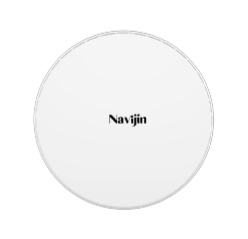
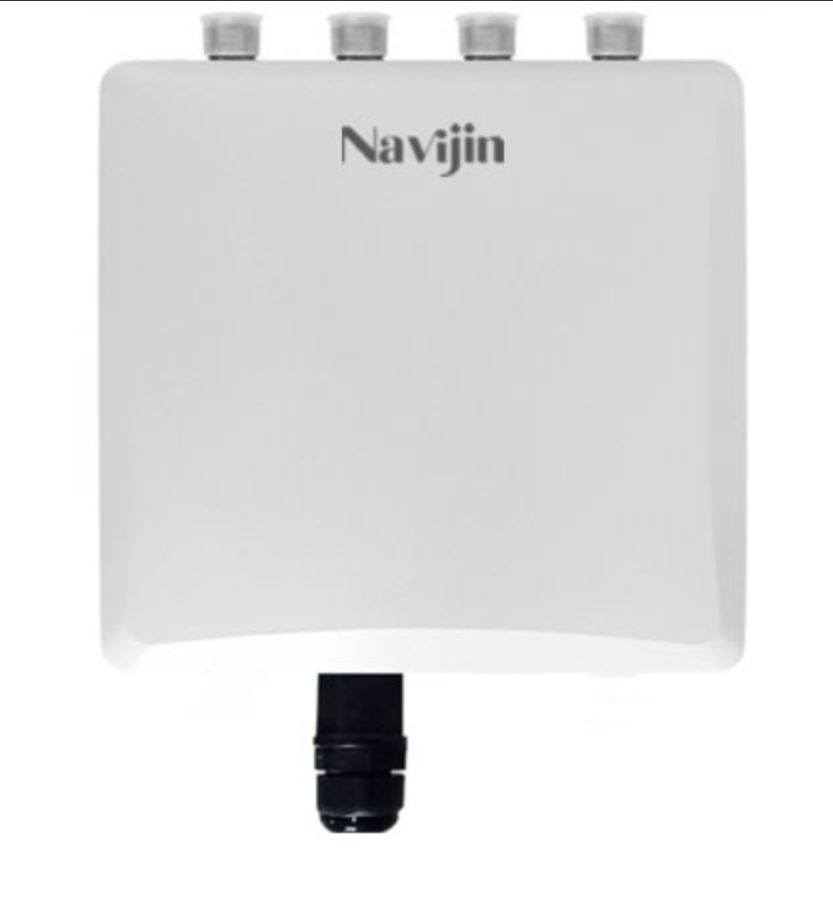
Navijin offers Wi-Fi 7 access points for indoor and outdoor use. The NW-AP725-2.5G ceiling access point and the NW-OAP739-2.5G tri-band outdoor access point deliver up to 9300 Mbps wireless data rate, a 2.5G uplink port plus an extra 1G LAN port, and support for 350+ users per access point. They are ideal for high-density areas such as hotel lobbies, conference halls, hospital wards, classrooms and open-plan offices.
To get the full benefit of Wi-Fi 7, the wired network must keep up. Navijin combines Wi-Fi 7 access points with multi-gigabit PoE switches, 10G SFP+ uplinks and Navijin gateways and AC controllers for central management of every access point, SSID and user policy.
Navijin Wi-Fi 7 projects are supplied with warranty, local RMA and technical support through our regional hubs in Dubai, Baku and Tripoli and our authorized partners. Contact us for a Wi-Fi 7 site survey or project quote.
Wi-Fi 7 (802.11be)
Wi-Fi 7 (IEEE 802.11be) adds wider 320 MHz channels, 4096-QAM and Multi-Link Operation, so devices can use several bands at once. Navijin Wi-Fi 7 indoor and tri-band outdoor access points deliver up to 9300 Mbps of wireless capacity, with 2.5G uplinks and multi-gigabit PoE switching to match.
The challenge
Conference halls, stadiums, lecture theatres and airport gates.
8K video, AR/VR, large file transfers and cloud desktops.
Real-time collaboration, gaming and industrial control over Wi-Fi.
New buildings that must stay current for 7 to 10 years.
Solution architecture
Ceiling Wi-Fi 7 access points with a 2.5G WAN port and an extra 1G LAN port.
Tri-band outdoor Wi-Fi 7 access points for stadiums, campuses, pools and ports.
2.5G and 10G PoE switches remove the 1 Gbps bottleneck between the access point and the network.
Gateways and controllers manage Wi-Fi 7 and Wi-Fi 6 access points together.
Business outcomes
Serve more users at higher speeds.
MLO keeps real-time traffic smooth.
Built for the next generation of devices.
Runs alongside existing Wi-Fi 6 access points.
Compare
| Wi-Fi 6 | Wi-Fi 6E | Wi-Fi 7 | Wi-Fi 8 (in development) | |
|---|---|---|---|---|
| IEEE standard | 802.11ax | 802.11ax (6 GHz) | 802.11be | 802.11bn |
| Bands | 2.4 / 5 GHz | 2.4 / 5 / 6 GHz | 2.4 / 5 / 6 GHz | 2.4 / 5 / 6 GHz |
| Max channel | 160 MHz | 160 MHz | 320 MHz | 320 MHz |
| Modulation | 1024-QAM | 1024-QAM | 4096-QAM | 4096-QAM |
| Headline feature | OFDMA, MU-MIMO | 6 GHz spectrum | Multi-Link Operation | Ultra-high reliability, multi-AP coordination |
| Navijin status | Available | – | Available | Coming soon |
6 GHz availability depends on national regulations. Wi-Fi 8 features are based on the IEEE 802.11bn draft and may change before the standard is finalised.
How we deliver
Our engineers review floor plans, cable routes, user density, camera counts and power, then agree on measurable targets for coverage, bandwidth and uptime.
You receive a documented design: topology, VLAN and IP plan, PoE power budget, Wi-Fi channel plan and a bill of materials using Navijin part numbers.
Switches, gateways and access points are pre-configured and labelled before shipping, so installation on site is fast and repeatable.
Certified partners install, test and document every link. Wi-Fi is validated with a post-installation survey and camera views are signed off with you.
As-built documentation, admin training, firmware guidance, warranty and RMA handled through Navijin and our authorised partners.
Recommended products
Every model below links to its full specifications and datasheet.
Wi-Fi 7 Ceiling wireless access point
View specifications →Outdoor Access PointWi-Fi 7 Tri-band outdoor wireless access point
View specifications →L3 Managed Switch24x 2.5G PoE+ + 6x 10G SFP+ L3 Managed PoE Switch
View specifications →L3 Managed Switch8x 2.5G PoE+ + 4x 10G SFP+ L3 Managed PoE Switch
View specifications →Unmanaged PoE Switch24x 2.5GE and 2x 10G SFP+ Unmanaged PoE Switch
View specifications →Gateway & AC Controller4-port Gateway + PoE Switch + AP Controller
View specifications →FAQ
To use the full capacity of a Wi-Fi 7 access point, connect it to a 2.5G (or faster) PoE port. Gigabit switches work but limit throughput.
Yes. Wi-Fi 7 is backward-compatible. Older devices connect normally, and Wi-Fi 7 devices get the new features.
Wi-Fi 8 (802.11bn) is still being standardised. Wi-Fi 7 is the best choice for projects today, and Navijin will add Wi-Fi 8 when it is ready.
Share your floor plans or site layout. We return a design, bill of materials and budgetary quotation, usually within a few working days.